Posts

Showing posts with the label White-breasted Nuthatch

Nature Note #187: Devil Down Head
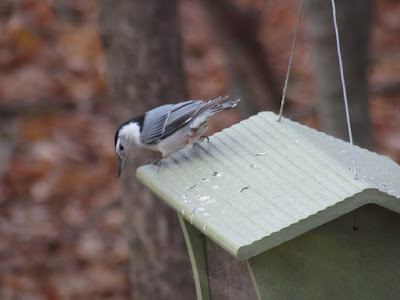
Image
I love old nicknames for birds. Whether they are folk names, sportsmans colloquialisms, or even names from other languages, learning how other groups of people identify certain animals and plants is always an interesting journey through the history of human culture and wildlife identification. The title of this post refers to an old folk name for a common yard and feeder bird, the nuthatch. Here in the northeast, we have two species of nuthatches; the white-breasted ( Sitta carolinensis ) and the red-breasted ( S. canadensis ). White-breasted nuthatch Red-breasted nuthatch Both species are perhaps best known for their tree-scaling ability that would make any free climber jealous of their skills. Many ornithologists have been equally amazed by the skills of the nuthatch. The economic ornithologist, Edward Howe Forbush noted in his Birds of Massachusetts that: "They seem to have taken lessons of the squirrel which runs down the tree headfirst,  stretching out his hi...

Out On the Wing #93: Winter Bird Weekend

Image
This past weekend was very birdy days for me. I've seen some pretty cool things this weekend and I'm so excited to share them. I assisted with a winter bird walk at the Watershed today. We had several people participate and were at varying skill levels when it came to birding. We started at the front of the main office and worked our way towards the back hedgerows. As we walked, we paused to notice the robins and waxwings feeding fervently on the berry-covered trees. We didn't stay long as the cold was bone-chilling and so we moved along at a fair clip to keep up our body heat. And wouldn't you know it, it would be a great morning despite the cold and my lack of gloves. As we entered the meadow east of the main office, we watched and listened for singing White-throated Sparrows ( Zonotrichia albicollis ). It was around this time that we noticed the Turkey Vultures ( Cathartes aura ) flapping low over the field. They were doing so because the thermals they needed to ...