Posts

Showing posts with the label wildflowers

Nature Note #170: Earth Laughs in Flowers

Image
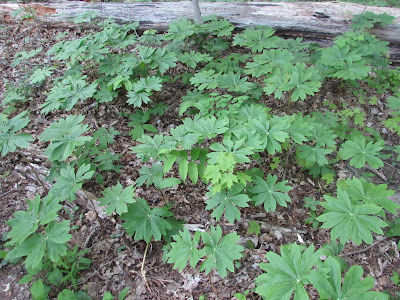
May-apples ( Podophyllum peltatum ) As summer steadily marches towards us, the countryside reminds us about the wonderful variety of wildflowers that flock the roadsides and dazzle the fields and woods. Flowers are a universal sign of nature and of her wonderful spread of colors, forms, and scents that blanket the landscape in the warmer months of the year. Many of the flowers we see along our roadsides and throughout our woods and fields are transplants brought over from Europe and Asia. Some like purple loosestrife ( Lythrum salicaria ) and garlic mustard ( Alliaria petiolata ) are nuisance species that take over areas of habitat that other native plants once thrived in. According to a report published in Ecological Economics , "an estimated 5000 plant species have escaped and now exist in U.S. natural ecosystems, compared with a total of about 17,000 species of native U.S. plants." (Pimental, Zuniga, and Morrison, 2004) This is damaging to many ecosystems found in ...
Nature Note #169: Can't See the Maples for the Mayapples

Image
Mayapples ( Podophyllum peltatum ) When you're out for a walk in the woods, little details can sometimes be lost in the majesty of the trees towering overhead, while summer birdsong rings through the foliage. While the woods are some of my favorite places to hike and bird in, this time of year offers me a chance to see one of my favorite organisms. Plants have the uber important role in most ecosystems as the chief providers of shelter, food, and most importantly, oxygen. According to North Carolina State University's Tree Facts page , a single tree can take in up to 48 pounds of carbon dioxide per year, cementing their value as invaluable converters of this greenhouse gas into an important breathable one. However, the plants I was admiring were not the trees, but a ground level plant grows in what looks like a shrunken and out of place colony of palm trees.  The May-apple is a common woodland plant that starts to appear in the Northeast in early May and continues t...

Nature Note #116: Late Summer Botanicals

Image
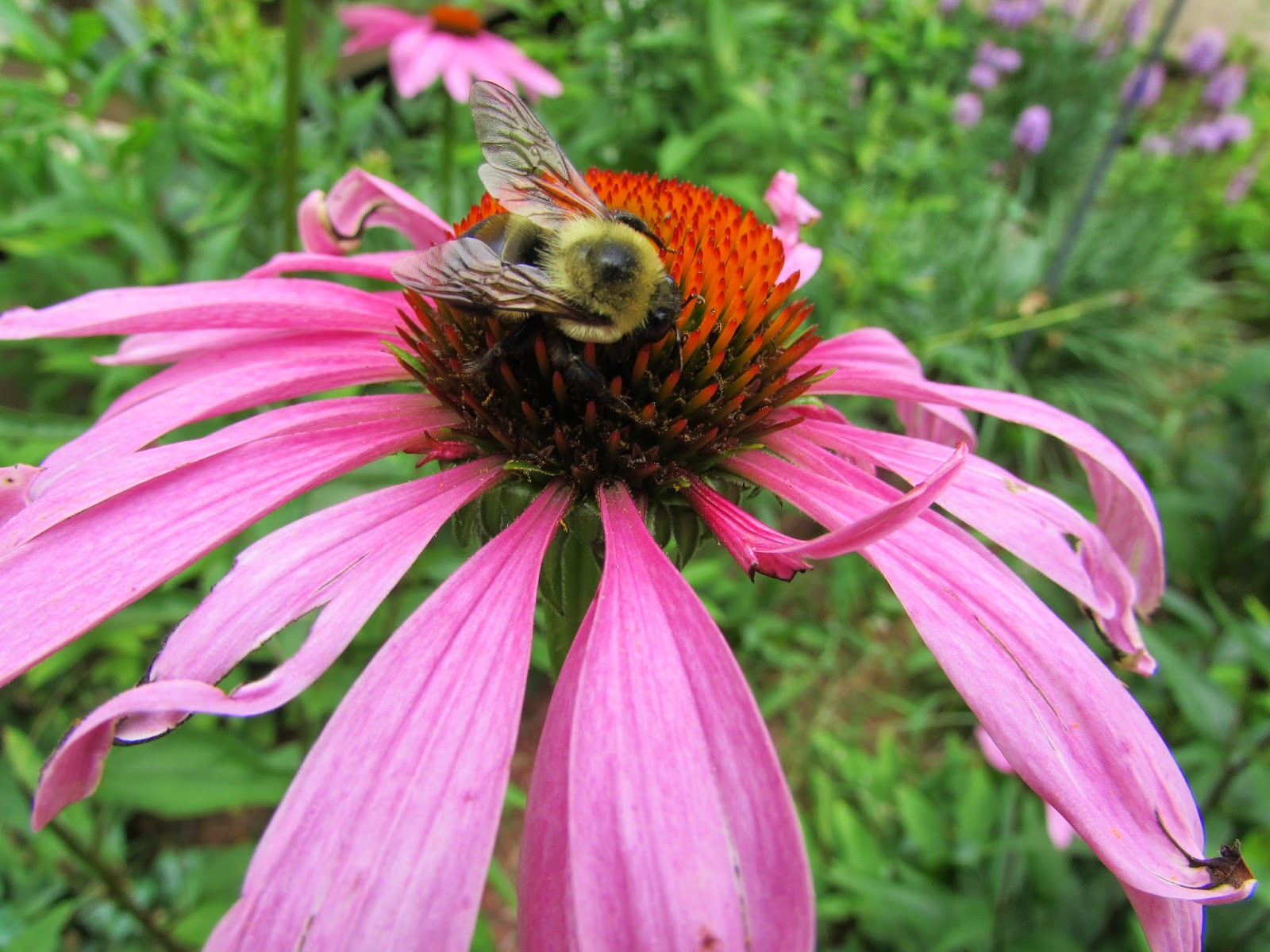
Apologies for not having posted for the past few weeks, but camp takes up a lot of time and energy during the week. So instead of a long winded explanation of my exploits over the past few weeks, I thought I'd treat you all to my photos of the flowers, shrubs, and trees I've seen over the past few weeks. I hope you enjoy them. A bumblebee ( Bombus spp. ) feeds on an Echinacea purpurea in my girlfriend's parent's garden. A presumed Dun Skipper ( Euphyes bimacula ) feeds on nectar from one of the many E. purpurea in the garden. Another close up of the skipper as it feeds on nectar using its proboscis. A Great Spangled Fritillary ( Speyeria cybele ) feeds on nectar as a bumblebee ( Bombus spp. ) intrudes. An impressive mode of feeding indeed. A presumed American Lady ( Vanessa virginiensis ) rests on a small E. purpurea . A damaged skipper rests on the petals of E. purprurea . A Day-Lily ( Hemerocallis spp. ) grows in the rough sec...

Nature Note #111: Adventures in Pennsylvania: A Walk in the Park

Image
Of all the places I've visited in Pennsylvania, the place I keep coming back to over and over is Peace Valley Park near Doylestown. I visited several times during the early spring to try and find a Red-headed Woodpecker ( Melanerpes erythrocephalus ) that had been reported near the Angler's Pier on the southwestern side. As usual, my ability to find rare or hard to find birds was hampered by the bird not appearing before me, so eventually I gave up .Then again, the first few times I looked for it, I had gone in the wrong direction... Yesterday however, I decided to see if I could walk around the entire lake and see as many birds as possible. I started around 4:15pm and no sooner had I left my car than I noticed some swallows sitting on the wires near the Lavender Farm across the street. The chattering buzz of the Barn Swallows ( Hirundo rustica ) and twittering notes of Tree Swallows ( Tachycineta bicolor ) whirled in air above me and some alighted near a pair of smaller, bro...

Nature Note #109: Adventures in Pennsylvania: Of Warblers and Wildflowers

Image
I had the great fortune of visiting a wonderful preserve yesterday in search of warblers and spring migrants. As this month marks the main passage of spring migrants in the Mid-Atlantic region, I have decided to do a big month to try and see as many different warblers, for as many points as possible. I made up an arbitrary point system where common species are worth 1 point, harder to find species are worth 3 points, and life birds are worth 5 points. I also added in the possibility of seeing Brewster's and Lawrence's Warblers for 10 and 12 points respectively. As of this morning, I have 9 points after seeing 9 species over the past two days. In the morning, I visited an excellent birding area called Bowman's Hill Wildflower Preserve, located near my favorite artisan town of New Hope, PA. As I exited the car, birdsong surrounded me. The sweet, squeaky notes of a Black-and-White Warbler ( Mniotilta varia ) rang down from one of the nearby trees, while a Blue-gray Gnatcatch...