Posts

Showing posts with the label red-winged blackbird

Nature Note #153: River of Blackbirds
Image
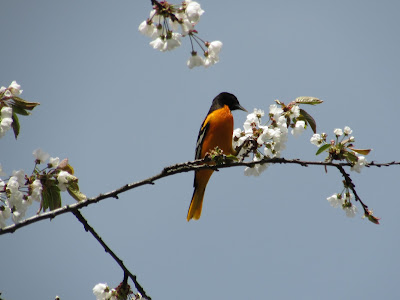
Blackbirds might not be the most charismatic group of birds, but they are filled with plenty of characters. From the songster orioles to the clanging grackles and the bastard cowbirds, blackbirds or "icterids" as ornithologists call them are a diverse group. Baltimore Oriole This past weekend, Alison and I headed over to Three Rivers in Baldwinsville to check out the bird life. While it wasn't our first choice for birding (Beaver Lake was closed so that volunteers could set up a Halloween-related festival), we were determined to find some birds. The leaves had peaked and were drifting off the trees one by one. In the distance, gunshots rang out precipitously. Perhaps a flock of geese had mistaken an array of decoys for peaceful comrades while the hunters lay out of sight, waiting for the right moment. While listening to the calls of robins and cardinals in the trees before us, a bubbly whistling caught our attention. Just below the robins were some smallish black ...
Nature Note #147: Why Nature?

Image
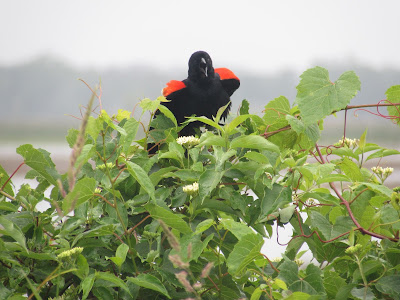
There are a lot of interesting things people have chosen to write about in this world. Some focus on the politics and problems of the world at large, while others write about their pet hobbies and ideas. I have chosen to write about an obsession of mine which is as large and varied as the world it encompasses. Those of you that visit regularly (despite the slow updates) know that the subject this blog covers is all things nature.  But why nature?  It seems like a simple question, but really it can be answered in so many ways. I will never know what precisely perked my interest in nature to start with. Maybe it was the day I watched a blackbird play over the garden hedge in Wales as a young boy, or the first time I ran terrified from my fishing rod when I caught my first ever Bluegill ( Lepomis macrochirus ). Perhaps it was the first time I canoed with my family down the Sudbury River taking in the smell of the water, the Red-winged Blackbirds ( Agelaius phoenicus ...

Nature Note #102: Winter Thaw and Spring's Arrival?

Image
This past week has certainly been telling me that spring is on the way with my earliest sighting of an Eastern Phoebe ( Sayornis phoebe ) ever last Sunday, to seeing a Red-winged Blackbird ( Agelaius phoeniceus ) and a Common Grackle ( Quiscalus quiscula ) at Cumberland Farms in Middleboro, and all the songbirds I've been hearing around the house too, it seems a sure sign that winter is coming to an end. Now when it comes to weather prediction and seasonal changes, the last thing I rely on is the perceived advice of a rodent. For those of you who don't know, I have a passionate disdain for woodchucks ( Marmota monax ) as they have made life difficult for the chickens by living under their shed and stealing their feed (which now costs $16 per bag making me even less happy to share the bounty with them). According to the rodent's forecast this year it would be the paradoxical claim of "six more weeks of winter" even though if the thing hadn't seen its shadow, it...

On The Wing #26: And the Lucky Winner Is....

Image
This will be a short entry, but a necessary one. Just two days before I left for my job in Norwalk, CT as a Long-tailed Duck or Oldsquaw ( Clangula hyemalis ) hunter surveyor, I spotted my 300th species. The goal is complete, but I don't want to stop there. Before I mention the latest species addition, I'm going to try and get as many birds as possible before the year is out. I'm hoping for 310, but we'll have to wait and see. Even 301 would be wonderful at this point. Anyhow, back to the matter at hand. The 300th species I saw on October 28th, was a single Rusty Blackbird ( Euphagus carolinus ) flying over Wayland Community Garden in Wayland, MA. I feel fortunate to have seen such a vulnerable species, but at the same time, marveled at every other birder's perceived ability to scope them out. They're very similar to Red-winged Blackbirds ( Agelaius phoenicus ) in flight and can only really be picked apart if they've landed and are pretty close by or by th...