Posts

On the Wing #71: Ringing of the Bell's
Image
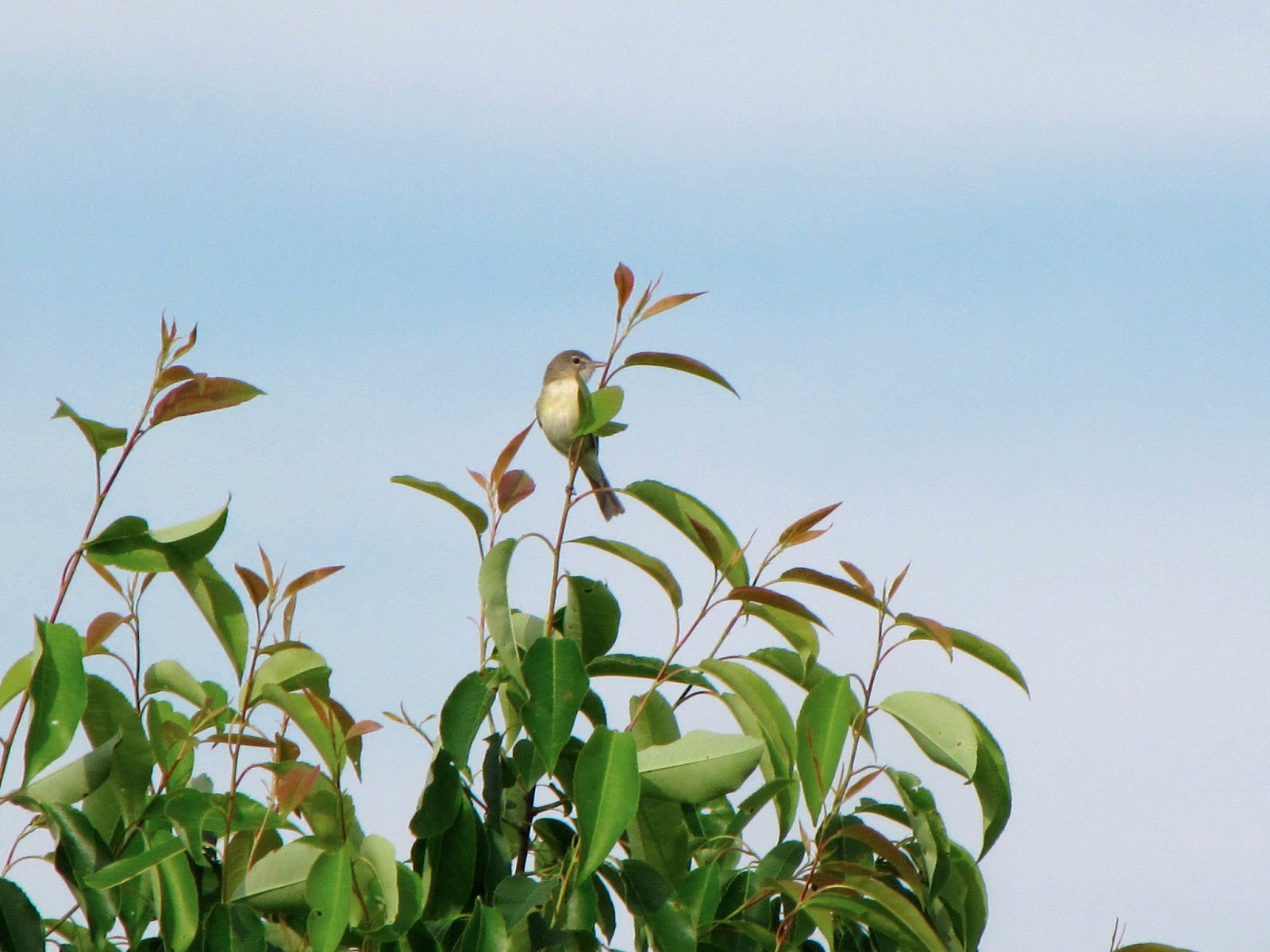
I'm back in Ohio this weekend and I'm so pleased to announce that my girlfriend, myself, and her colleagues have spotted the Bell's Vireo ( Vireo belli ) that have been frequenting Heritage Trail Metro Park in Hilliard. We called this male in using a playback call on our smartphones. It responded more or less immediately and posed for these photos. 332 down and 18 to go on my way to the 350 I want to have by the end of the year! Let's see what I can find this week ^_^.
On the Wing #70: Ohio Weekend

Image
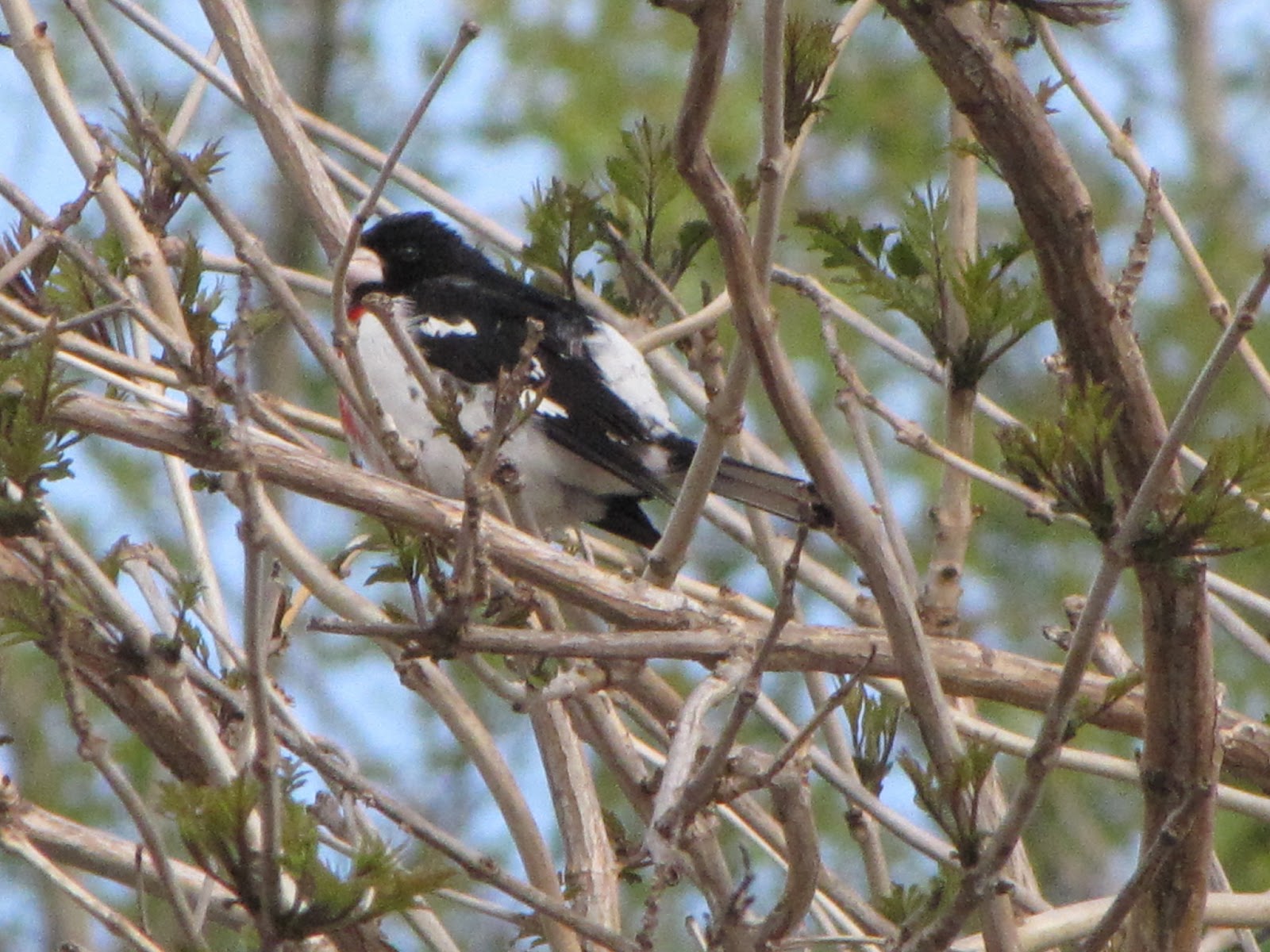
This weekend was one of the most successful and amazing birding experiences I've had in ages. I saw seven life birds, spend an inspiring and adoring, yet inappropriately limited amount of time with my love (it'll be longer in July, I promise!), and met one of America's best birders, Kenn Kaufman. The warblers alone were amazing, but what touched me the most was the variety of birders present. Young and old, big and small. Beginners with Peterson's and Sibley Guides and enthusiasts with enormous telephoto lenses! Huge crowds gathered to see feathered migratory miracles like Blackburnian ( Setophaga fusca ), Wilson's ( Cardellina pusilla ), and Chestnut-sided Warblers ( S. pensylvanica ) (all life birds for me by the way) and there was an overall appreciation of the wonders of bird life in the spring time. What a marvelous weekend indeed and I only hope that I can get back there as fast as possible to experience it all again.  Rose-breasted Grosbeak ( Pheucticus lu...

On the Wing #69: Swift, Swallow, or Martin?

Image
While my parent's were visiting me this weekend, the subject turned to the sickle-winged birds that skate over the pond on thin air, twittering as they go. I am of course referring to Tree Swallows ( Tachycineta bicolor ), one of the earliest swallows to return to the Eastern Seaboard come March and April. This came up again after I pointed out some Chimney Swifts ( Chaetura pelagica ) shooting around in the skies above Labertville, NJ. I remember my dad asking, "What is the difference between swifts, swallows, and martins then?" It was an appropriate question. They look fairly similar and can be mistaken for one another if the viewer is inexperienced. Swallows and martins are a diversely colored family of 83 species that range over much of the globe. The most common is the circumpolar Barn Swallow ( Hirundo rustica ) that nests over much of the Northern Hemisphere and likewise winters over much of the Southern Hemisphere. Generally the name "swallow" is ...

On the Wing #68: Ringed Gimpy

Image
The Ringed Gimpy ( Pisa towerii ) is a pigeon like bird whose only movement involves wandering aimlessly in circles on both sides of the continent.  For those of you who are unfamiliar with the work of John Sill, he is the author of a trilogy of humorous bird books with the first being titled "Seldom Seen and Little Known Birds of North America". As the title suggests, I am experiencing the same annoyance as one of the fictionalized birds faces in the book. The Ringed Gimpy is a pigeon-like bird with a ring around its neck and one leg that's shorter than the other. As a result it very subtly lists to one direction or another depending on sex (males have a different short leg to the females). The reason I'm bringing this up is because of my own leg problems. For the past month, I've been limping with varying severity due to a stiff knee with an unknown cause. As a result, I've become crippled during the worst time possible. I've been hyped about the p...

On the Wing #67: Angry, Angry Geese

Image
Things are heating up at Wargo Pond this week. The frogs are out, the sunfish are starting to make their nests, and the geese are angrier than ever. When most people tend to think of Canada Geese ( Branta canadensis ) they think of the aggressive pooping birds that ruin any grassy area they accumulate in. When I think of Canada Geese, I think of the calls of a passing flock that are so pleasing to hear on a crisp fall day, their neat black stockinged heads and necks, and their devotion to their mates, young, and territory. These are some of the prime reasons they are one of my favorite birds. Being a fan of waterfowl in general, the late spring and early summer is one of the best times to witness waterfowl behavior. Being very common throughout North America, Canada Geese are very easy to observe when it comes to mating rituals and defensive behavior. Just today, I saw several behaviors detailed in the "Stokes Guide to Bird Behavior Vol 1". (Originally titled "A Guid...

On the Wing #66: Cowbird Casanovas

Image
Spring is a time for song. First the frogs, then the birds (or sometimes both at once), and eventually the insects. Each morning I've heard a plethora of birdsong, but by far one of my favorites is the Brown-headed Cowbird ( Molothrus ater ). This answer might surprise some bird lovers who think of cowbirds as abhorrent creatures bent on dumping their offspring into the nests of their unsuspecting songbird neighbors. While this is true and to the layperson, this seems like a strange reason to like a bird, it isn't the primary reason. The main reason I like them is for the male's liquid song that tends to begin and end with a chatter. As such, while they try to be classy by having a sweet song, they ultimately give away their "trashy" origins by their brash, nattering calls. The icterid Casanova sings from atop a tree... While delivering his courtship address, the male raises his shoulders and puffs up his back feathers. It can be said though that having s...

On the Wing #65: Bombay Hook

Image
What a day yesterday! I got two more lifers and saw a ton of species for my year list. It was such a great day and tiring too. I was so beat when I got in and so pumped after all that I'd experienced. I visited at the perfect time it seemed. Shorebirds were stacking up on the main pool/mudflats and it seemed like everyone was filling themselves up for the warmer months ahead. With new camera in hand and notes taken, I headed off to document my roaming. Here's what I found. Icterids like Red-winged Blackbirds ( Agelaius phoeniceus ), Common Grackles ( Quiscalus quiscula ), and Brown-headed Cowbirds ( Molothrus ater ) were so common, especially around the visitors center. Everywhere you turned your eyes and ears you saw and heard the chacking, clinking, and checking of these black flocking birds. Northern Cardinal ( Cardinalis cardinalis ) seen at the visitors center. The Raymond Pool was teeming with bird life. Dunlins ( Calidris alpina ) flurried around and fed feve...